
Sullivan County Sex Offender Checks
Begin with the Missouri Sex Offender Registry search. The Missouri State Highway Patrol Criminal Justice Information Services Division maintains the statewide database, while the Sullivan County Sheriff verifies registration information at the local level. A county filter shows public entries tied to Sullivan County. Name, address, and radius searches answer different questions, so select the mode that fits the reason for checking. A name search works for a known person. The county view supports wider community awareness. Radius mode focuses on where registrants live, work, or attend school near a supplied address.
No official, separate Sullivan County registry map was documented. The official access chain is therefore the MSHP registry first, the sheriff for local verification, and the national search when a person or address may cross state lines. Registry data updates daily, but MSHP does not promise perfect accuracy. An address that cannot be geocoded may not appear as a map pin. Search the county list and name fields before treating an empty map as a clear result.
The MSHP sex offender statistical report generator provides a separate statewide reporting channel.
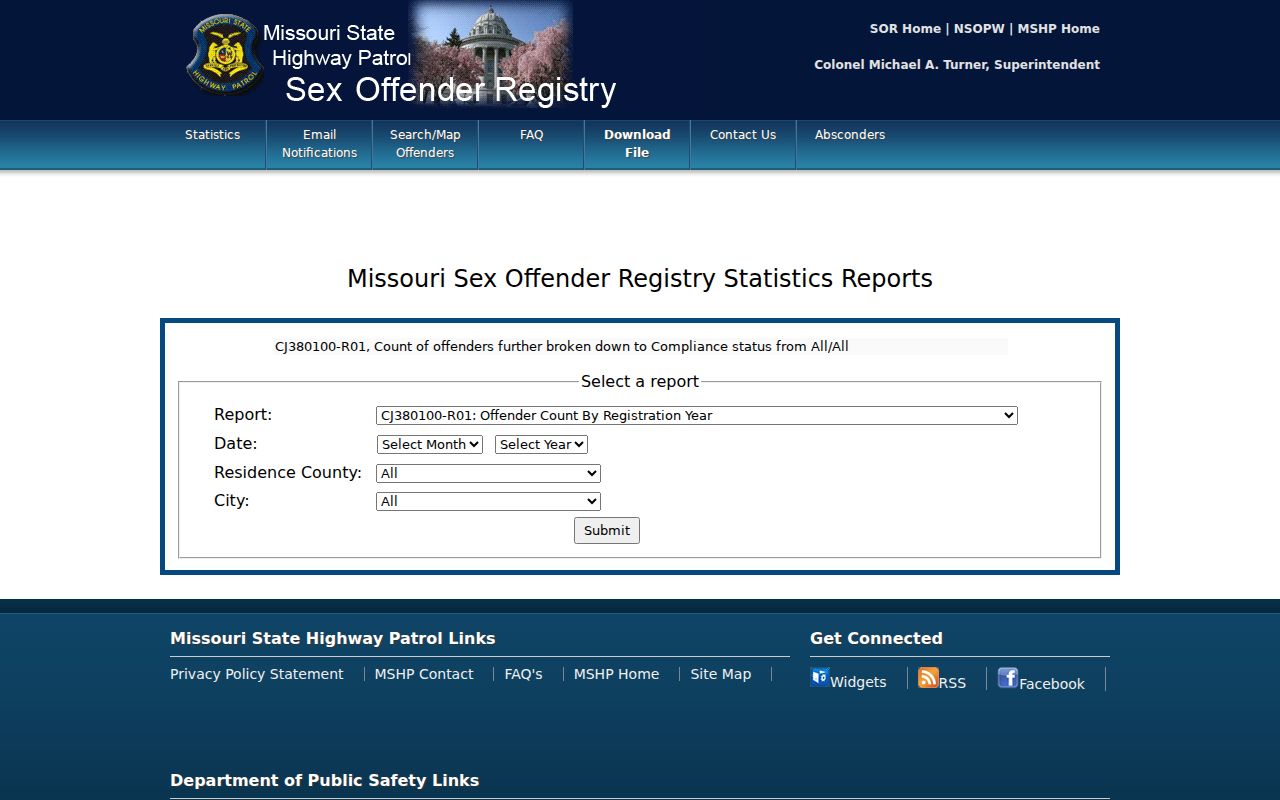
The report tool adds aggregate context, but it does not replace a Sullivan County sex offender search for a specific name or address.
Sullivan County Registry Radius Alerts
Missouri’s registry notification account can watch an address rather than requiring a fresh manual search each day. The official registry alert tutorial says a subscriber creates a user-defined address label, selects a distance, and supplies the street, city, state, ZIP code, and email address. The system sends notices when a registrant moves into or out of that chosen radius. A household can label more than one location in plain terms, which helps distinguish the area around home from another place used for routine family activity.
Sullivan County covers a broad rural area, so a wider radius may catch moves that a tight urban search would miss. That choice also creates more email. Use a range that matches the location and review each alert against the full profile. The map is a tool, not a guarantee. If an address fails to plot, switch to the county list, ZIP, city, or name search and contact the sheriff when the result still appears wrong.
Note: An alert reports a registry move within the chosen distance; it does not predict conduct or replace ordinary safety planning.
Missouri Sex Offender Registry Searches
The Missouri registry supports both known-person and geographic searching. At least one criterion is required for a known-person query. Exact spelling and birth information can help separate people with similar names, while the Sullivan County dropdown narrows a broad results list. Radius mode is different: it needs a full address and a distance choice. Do not guess at a radius that is not displayed on the live form, since the captured research did not establish the current menu values.
- Open the official registry search and read the conditions and accuracy notice before continuing.
- Choose a name, county, address, or radius approach, then enter only the criteria needed for that search.
- Review the result list and compare the name, birth date, photo, address, county, and status before selecting a profile.
- Open the profile tabs, note the update and compliance details, and report a suspected error through the official correction chain.
The search controls documented from the public interface are set out below. Optional fields can narrow a query, but adding incorrect data can hide the right result.
| Field Label | Type | Required | Notes |
|---|---|---|---|
| Offender Last / First Name | Text | Optional | Searches true and alias names; at least one known-person criterion is needed |
| Date of Birth | Date controls | Optional | Month, day, and year help distinguish similar names |
| Predator / Tier Level | Dropdown | Optional | Tier choices include I, II, and III |
| Address Type / Street | Dropdown / text | Optional | Address type helps with incarcerated or moved-out-of-state records |
| City / County / State / ZIP | Text / dropdown | Optional | Select Sullivan for a county-focused search |
| Full Address / Distance | Address fields / dropdown | Radius mode | Street, city, state, ZIP, and a displayed distance are required |
| Search / Reset / State Map | Controls | As used | Runs, clears, or changes the geographic view |
Sullivan County Registry Across States
The Missouri registry is the best source for details maintained by Missouri officials. It does not search every other state. The U.S. Department of Justice’s National Sex Offender Public Website, known as NSOPW, sends one query across participating state, territorial, and tribal public registries. That makes NSOPW useful when a person recently moved, an address sits near a state line, or the searcher does not know which jurisdiction holds the active registration.
The official NSOPW search shows the national search entry and its participating-jurisdiction scope.
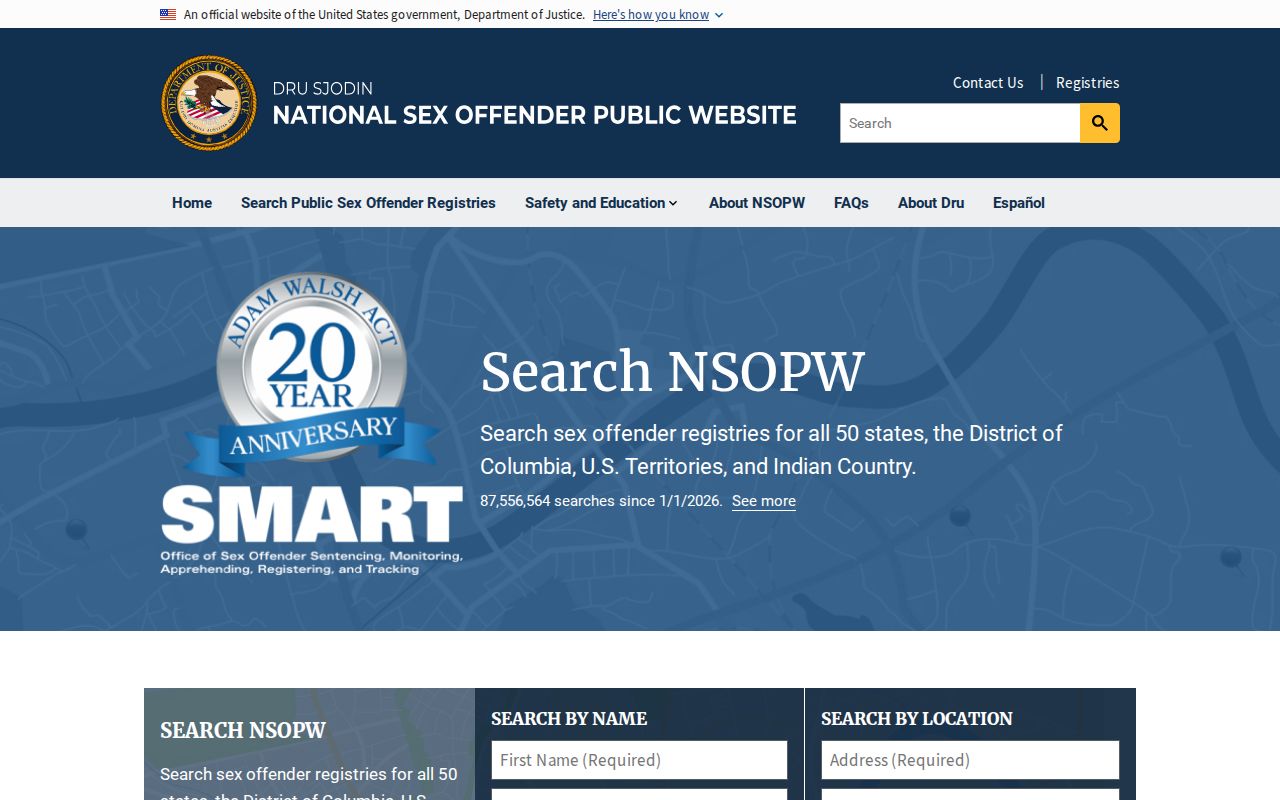
Open the linked state profile from a national result and rely on that registering jurisdiction for the detailed record. NSOPW is a cross-state layer, not a second Sullivan County database. If Missouri and NSOPW appear to differ, compare update timing, address type, and status, then ask MSHP or the Sullivan County Sheriff to check the local registration data.
Note: A national no-result response does not prove that no registration exists, because each participating jurisdiction controls its own public data.
Registry Profiles: What They Show
A public Missouri registry profile combines identity, location, offense, tier, and compliance information. Read those parts together. A matching name alone is weak evidence, while the birth date, photograph, physical description, aliases, and address can help confirm whether the result concerns the intended person. Tabs may expand the profile beyond its first screen. They can include additional addresses, vehicles, offenses, scars or tattoos, past photos, aliases, and release information.
The portal warns that a statute linked from a profile may be the current law, which can differ from the version in effect at conviction. The registry also does not display a person’s complete criminal history. For the underlying filed case and disposition, a reader may need the county’s court case lookup.
| Name & Aliases | Primary name plus public true-name or alias entries used to distinguish identity |
|---|---|
| Photo & Description | Current photograph and released height, weight, hair, eyes, race, sex, scars, marks, or tattoos |
| Registered Address | Street-level home address with city, state, ZIP, county, plus work or school addresses when shown |
| Offense & Statute | Most recent offense, description, offense date, statute link, offense place, and released victim category details |
| Tier | Tier I, II, or III classification tied to duration and in-person verification duties |
| Registration Status | Compliant, Non-Compliant, Pending Registration, Absconder, Incarcerated, or Moved Out of State |
| Vehicles & Other Tabs | Public plate, year, make, model, color, addresses, aliases, photos, offenses, and release details when present |
The Missouri registration-fields statute identifies the information collected for the registry.
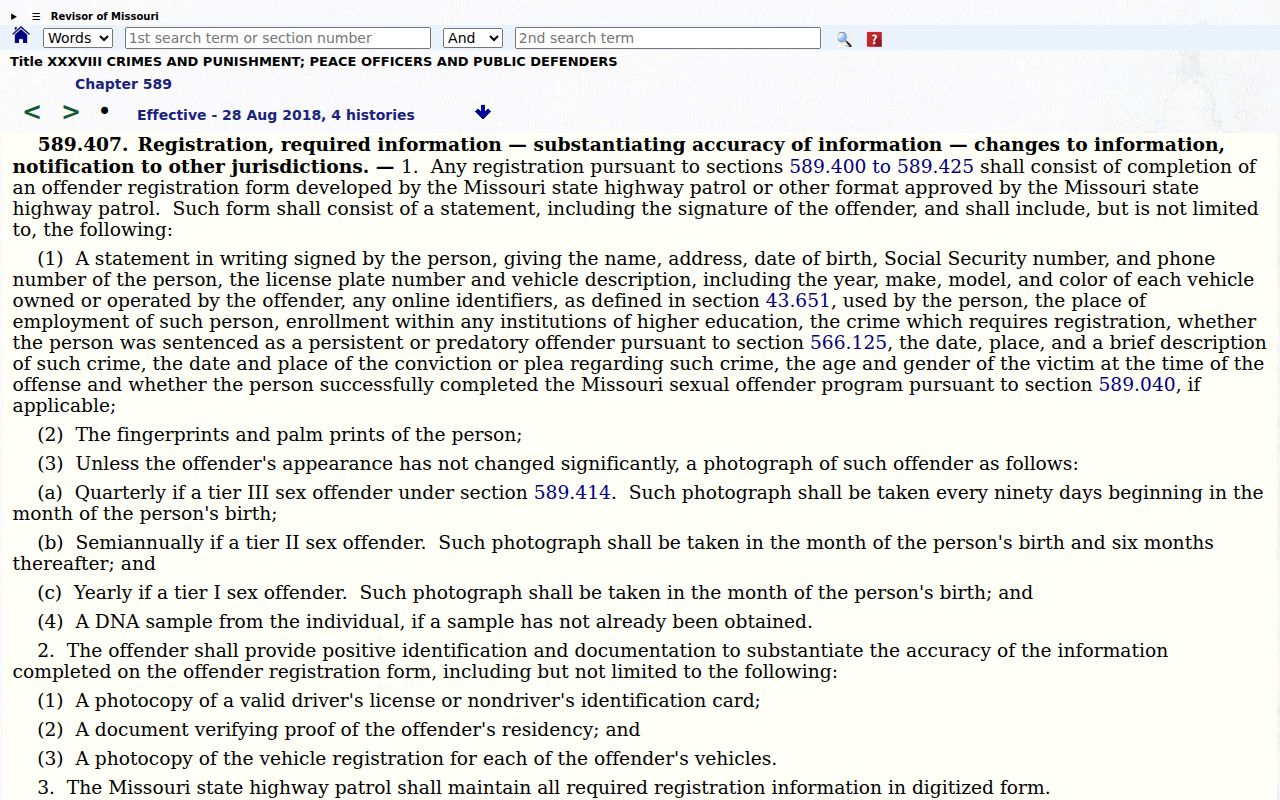
The public profile releases only the fields authorized for display, so it should not be read as the registrant’s whole government file.
Sullivan County Offender Registration Office
The Sullivan County Sheriff is the local registration official for the county. Missouri law assigns registration work to the county chief law-enforcement official, while MSHP maintains the statewide public system. Registrants report and verify required information through that local office. The sheriff also serves as the first contact when a Sullivan County address appears wrong, a registrant may not be following a reporting duty, or local verification is needed before MSHP corrects the public profile.
The official county registration-official statute identifies that local role.
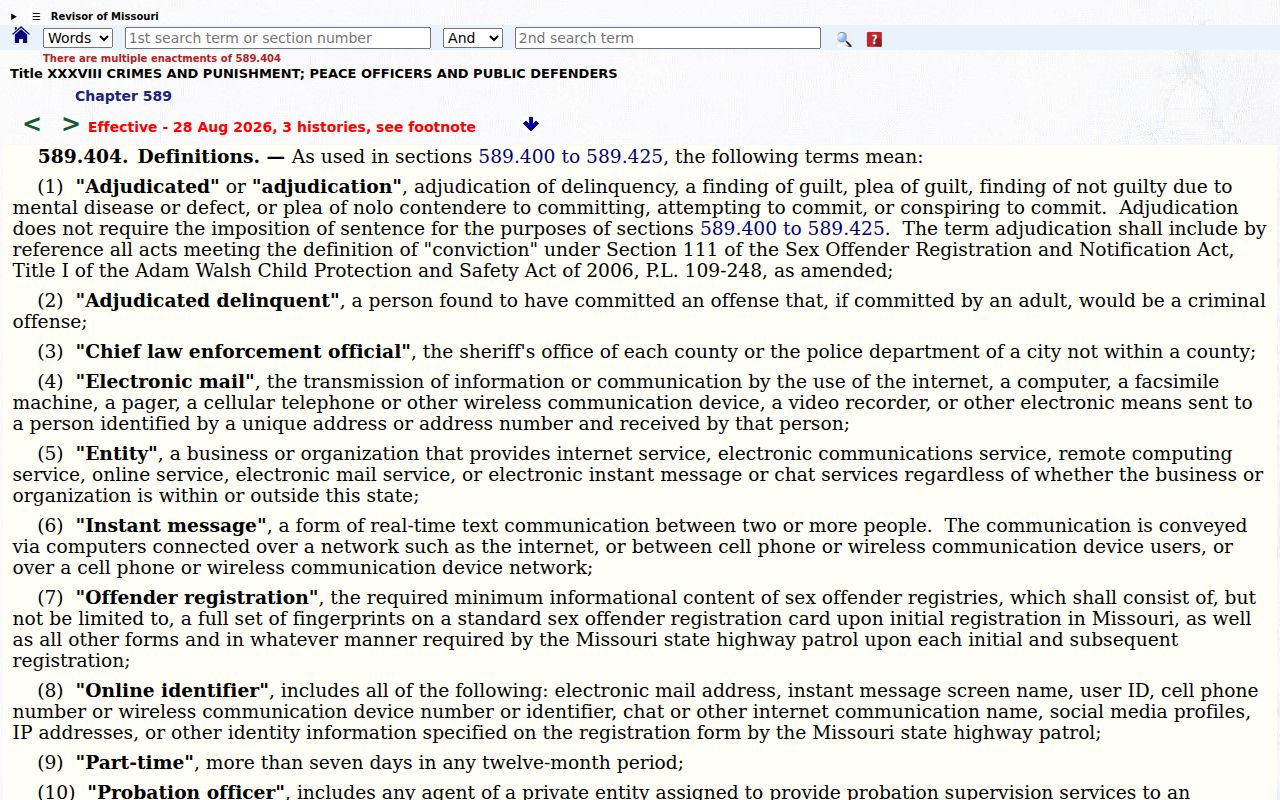
The official Sullivan County office directory places the Sheriff at 109 N. Main Street, Suite 9, Milan, MO 63556, with telephone 660-265-3313. No separate online registration-unit form or published verification-counter schedule was located. Call before travel. Give the name, profile link, address at issue, and the precise fact that appears wrong. Avoid contacting the listed person or household.
Sullivan County Sheriff
109 N. Main St., Suite 9
Milan, MO 63556
660-265-3313
Local registration, address verification, and suspected noncompliance reports.
Note: Published county directory hours are general office hours, so confirm registry counter access before going to Suite 9.
Registration Levels and Duties in Missouri
Missouri uses three tiers. The tier affects the basic registration term and how often a registrant appears in person to verify information. Tier I carries a 15-year statutory term and annual verification in the birth month. Tier II carries 25 years and semiannual verification in the birth month and six months later. Tier III generally lasts for life and requires verification every 90 days, with the photo schedule governed by statute.
The registration applicability and duration law supplies the statutory framework.
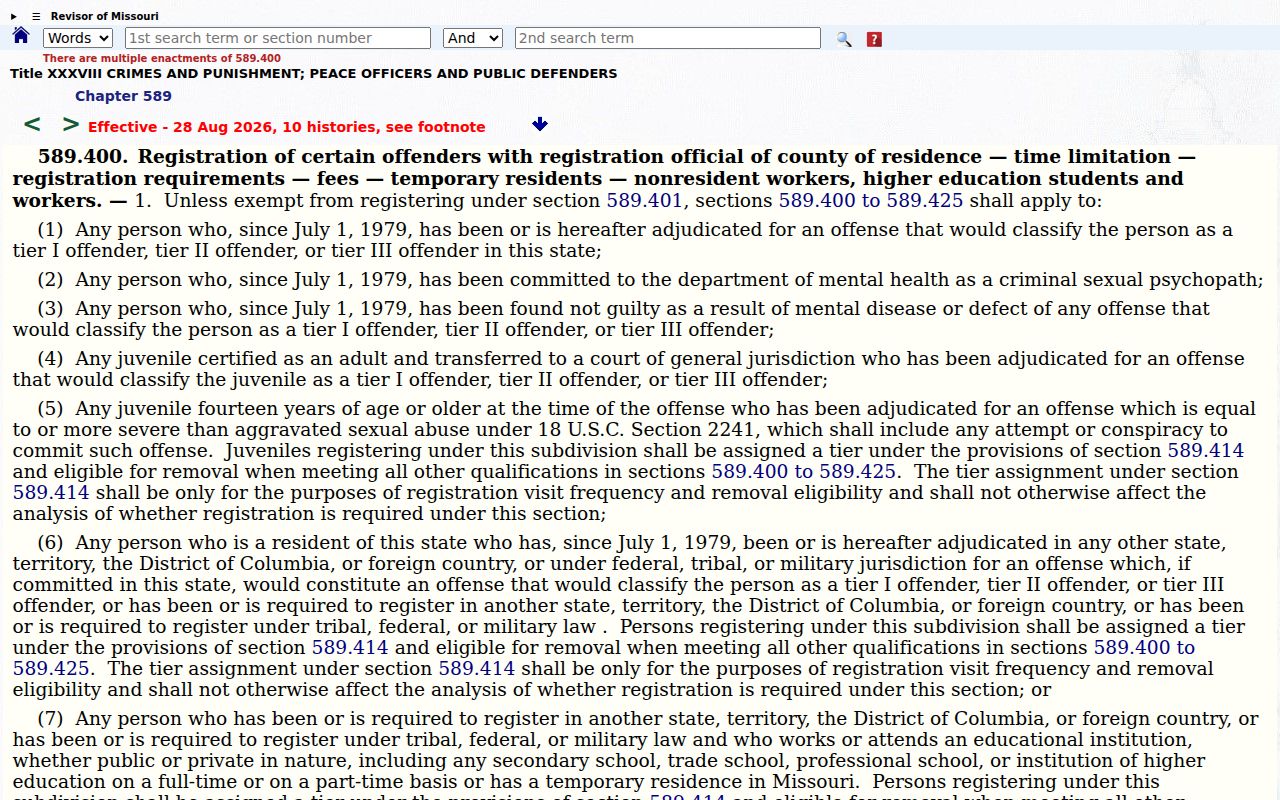
That law explains why a profile remains public according to the governing duty, not merely the age of the conviction.
The Missouri tier and reporting-frequency statute sets the recurring in-person schedule.
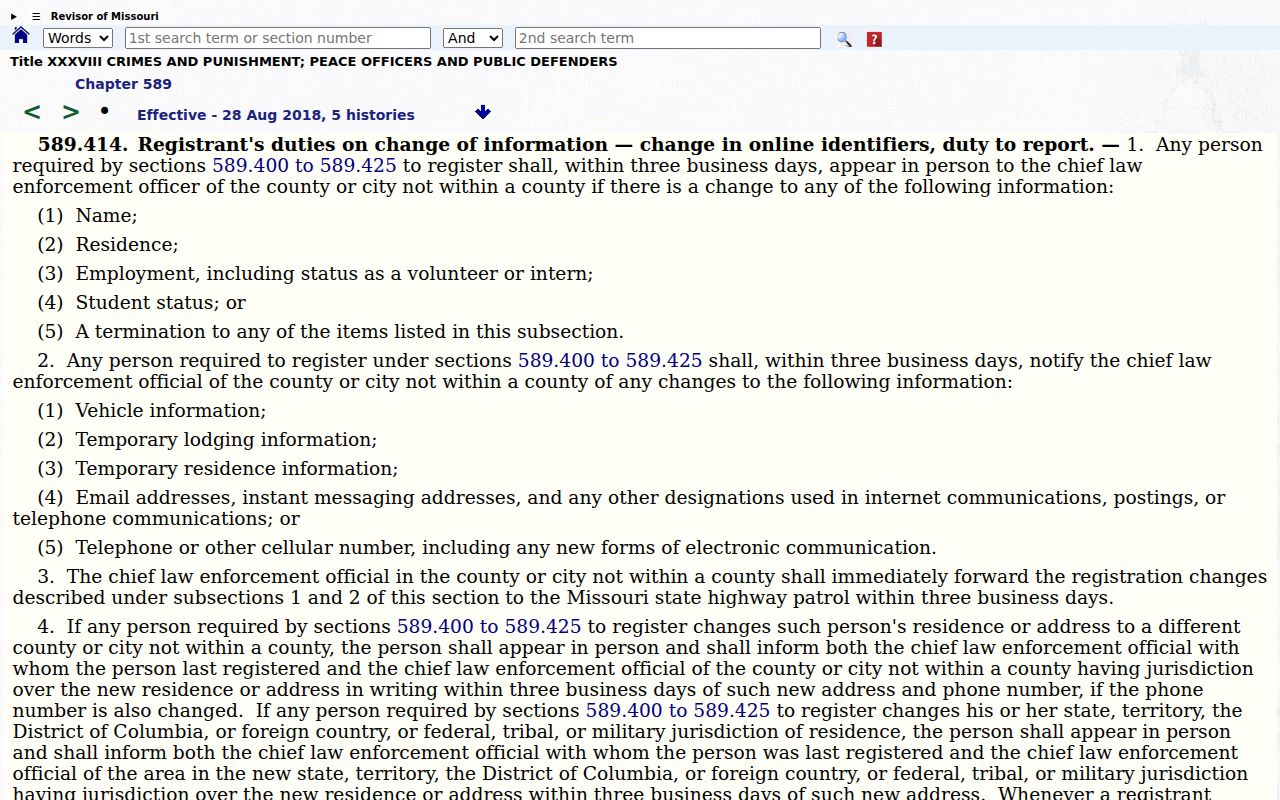
The schedule helps explain why an apparent lapse should be reported for official review rather than treated as proof of a new offense.
| Tier | Statutory Duration | In-Person Verification |
|---|---|---|
| Tier I | 15 years | Annually in the birth month |
| Tier II | 25 years | Semiannually, in the birth month and six months later |
| Tier III | Life | Every 90 days; photo schedule applies under statute |
These periods do not always end with automatic removal. Federal law or another jurisdiction’s duty can affect the result, and Missouri’s available routes depend on the tier and specific statutory conditions.
Sullivan County Registry Status Corrections
Status labels need context. “Compliant” reflects reported registration compliance, not a finding about future risk. “Non-Compliant” signals an unmet registry duty in the system. “Pending Registration” indicates that registration is not yet complete. “Absconder” calls for law-enforcement handling. “Incarcerated” and “Moved Out of State” explain why a normal home-address view may not fit. None of these labels should be rewritten or inferred into a different legal conclusion.
When a Sullivan County sex offender listing looks wrong, save the profile URL and note the field, status, or address in question. Call the sheriff first for a local address or possible missed report. Registry questions can also go to MSHP at 573-526-6348 or mosor@mshp.dps.mo.gov. Give clear facts. Do not confront anyone. The sheriff can verify local registration data, and MSHP can correct the statewide display.
Removal is also formal. The Missouri petition-for-removal statute shows that reaching a nominal date does not itself delete a registry entry.
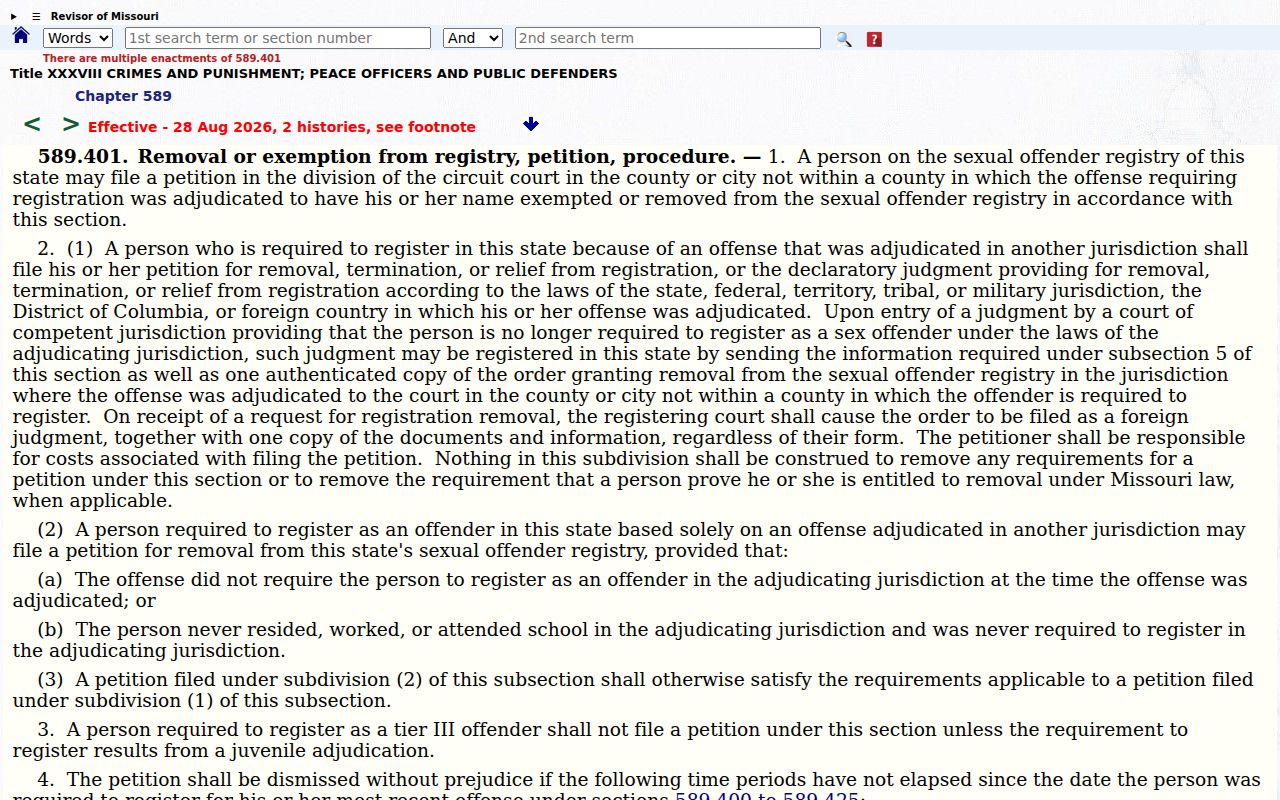
Tier I may qualify for a five-year reduction after a ten-year clean record and satisfaction of statutory terms. Tier II uses the 25-year petition framework. Tier III generally lacks that route except for the specified juvenile-adjudication framework.
Note: Report a data error through the sheriff and MSHP chain; report an urgent threat through the proper emergency law-enforcement channel.
Sullivan County Registry Location Rules
Missouri has several location restrictions for specified offenders, but no single restriction applies to every person on the Sullivan County registry. Applicability turns on the offense, dates, status, and statutory text. The safest reading is precise: identify the statute that governs the person’s facts, rather than treating a registry tier as an automatic distance rule.
The MSHP public registry website statute provides the state public-access basis.
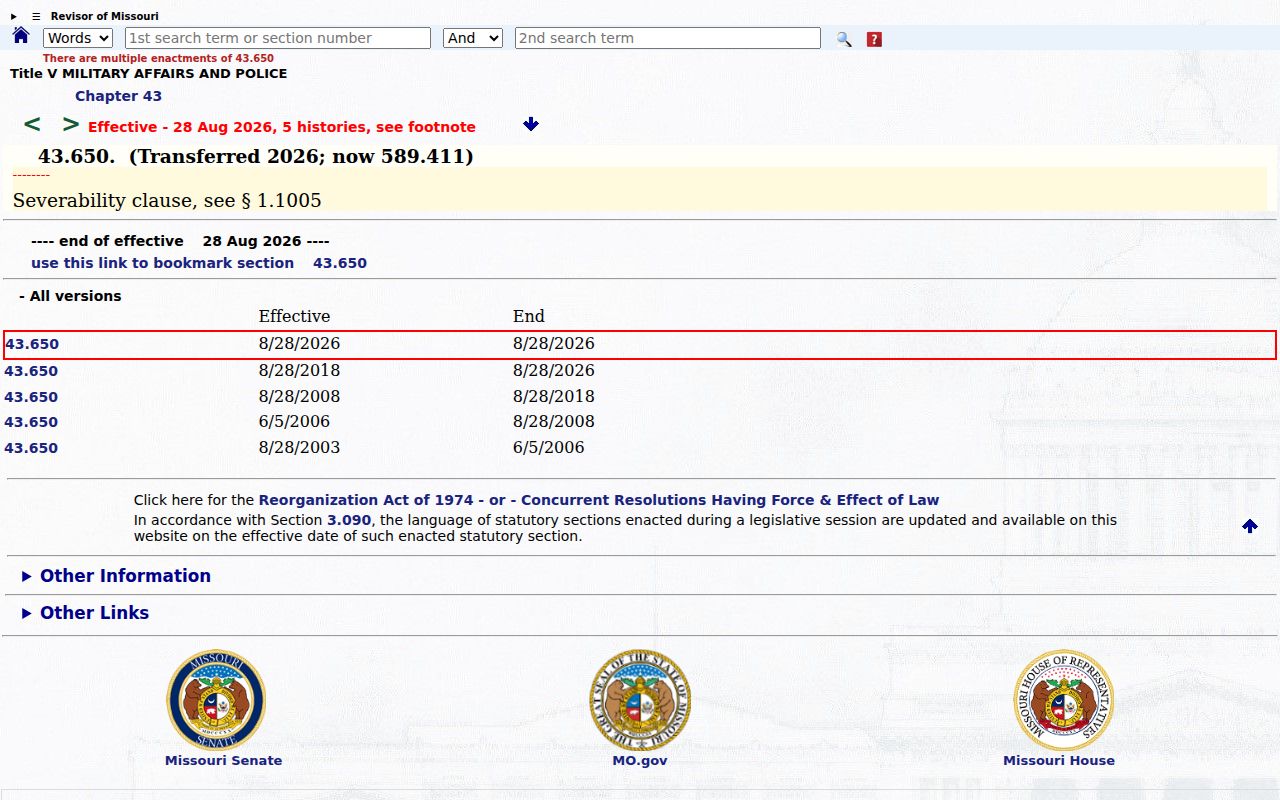
Public access supports awareness, while the separate offense-specific laws control where a covered person may reside or be present.
The 1,000-foot residence restriction applies to specified offenders near certain school, child-care, and victim property.
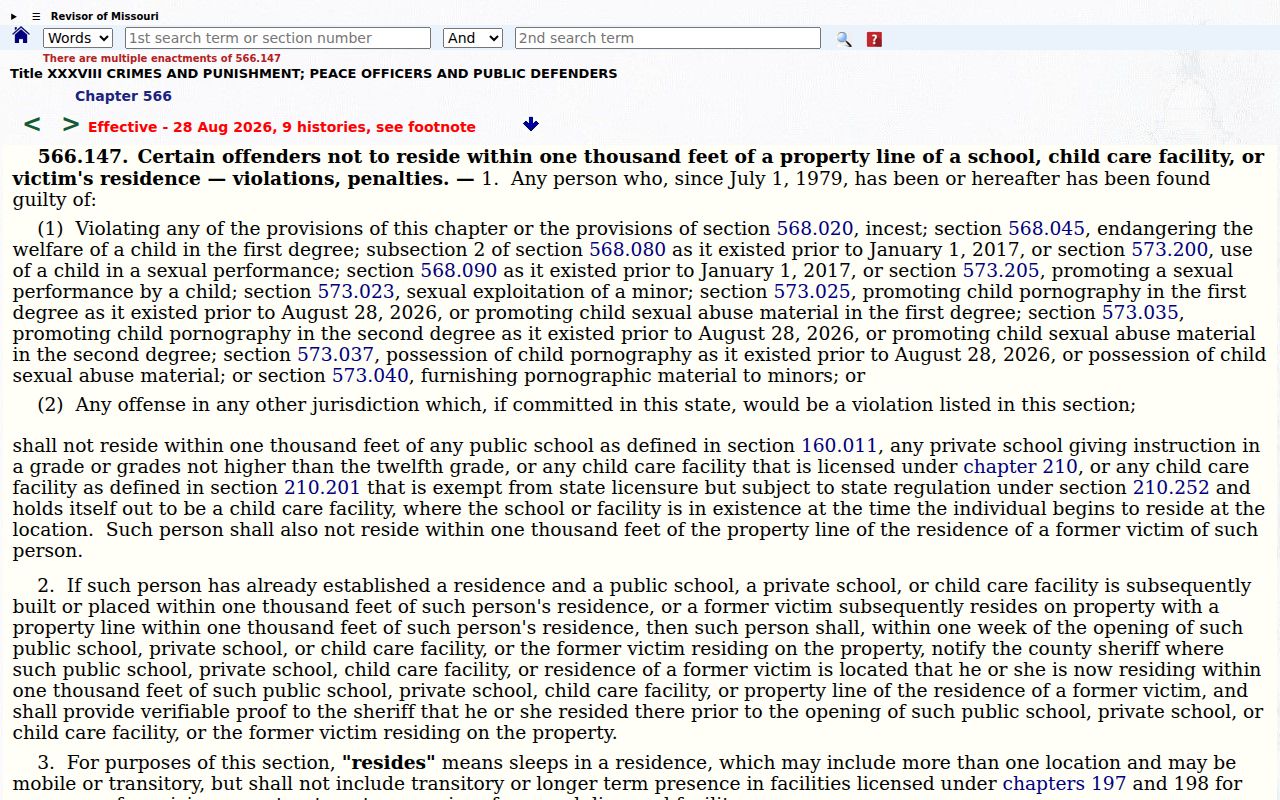
It should not be assigned to every registry profile without checking the law’s coverage.
The 500-foot child-care presence restriction addresses covered conduct near child-care facilities.
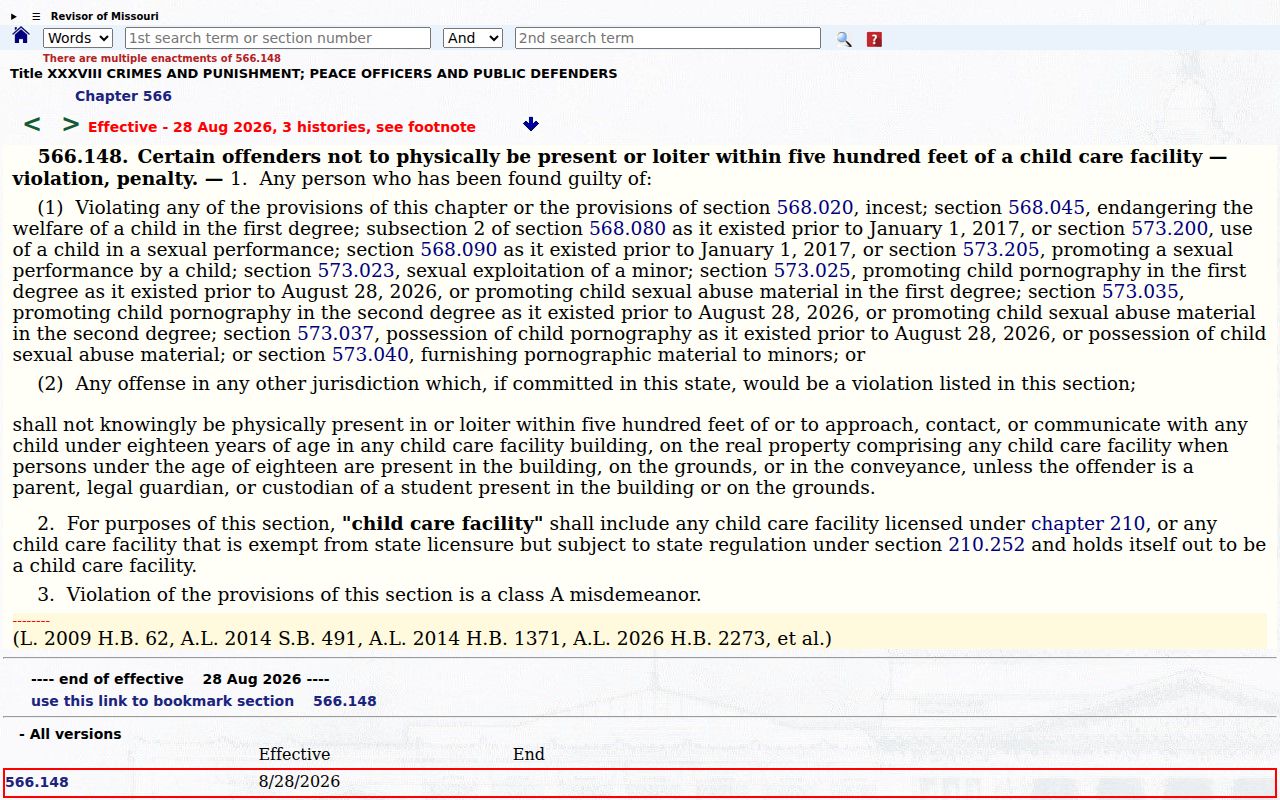
Presence rules and residence rules are distinct, even when both use distance measures.
The school-property presence statute sets another rule for people within its defined class.
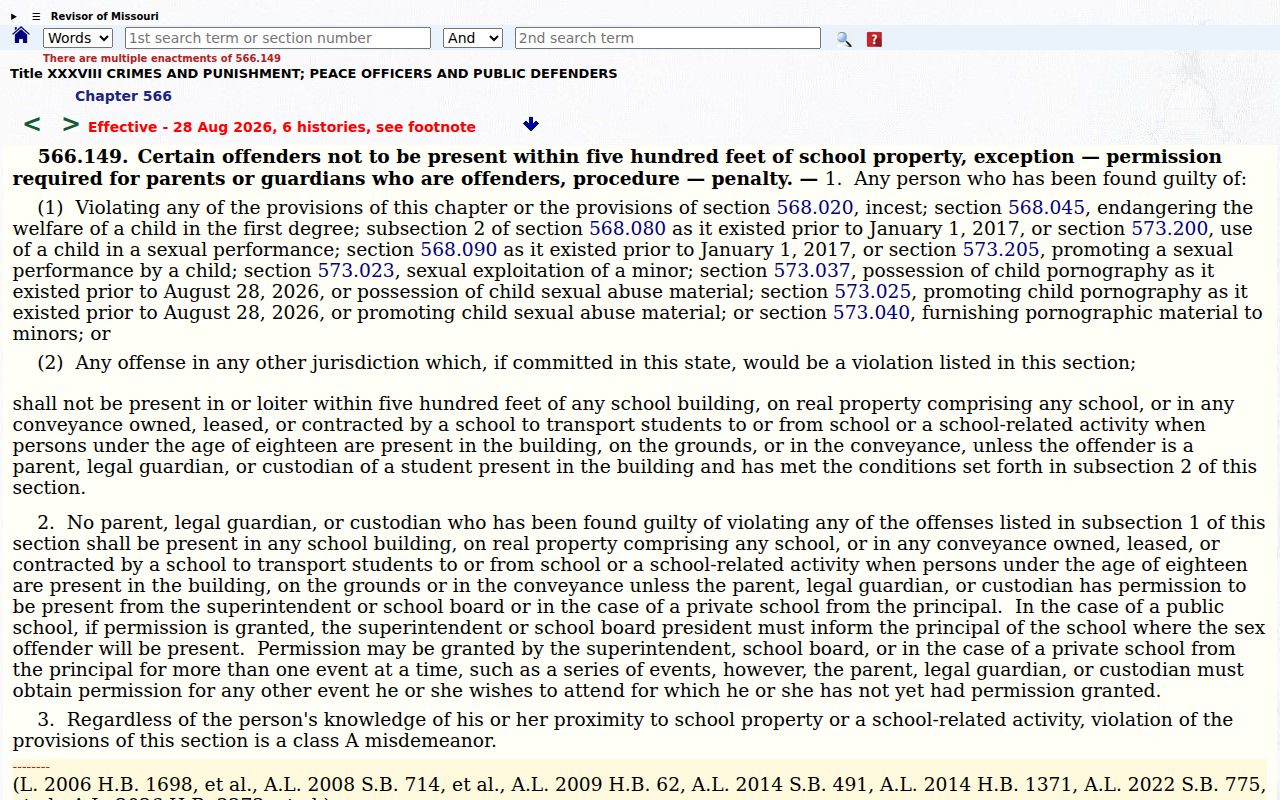
A map pin alone cannot show whether every element of that statute applies.
The parks and similar places restriction addresses listed parks, pools, athletic complexes, museums, and nature centers.
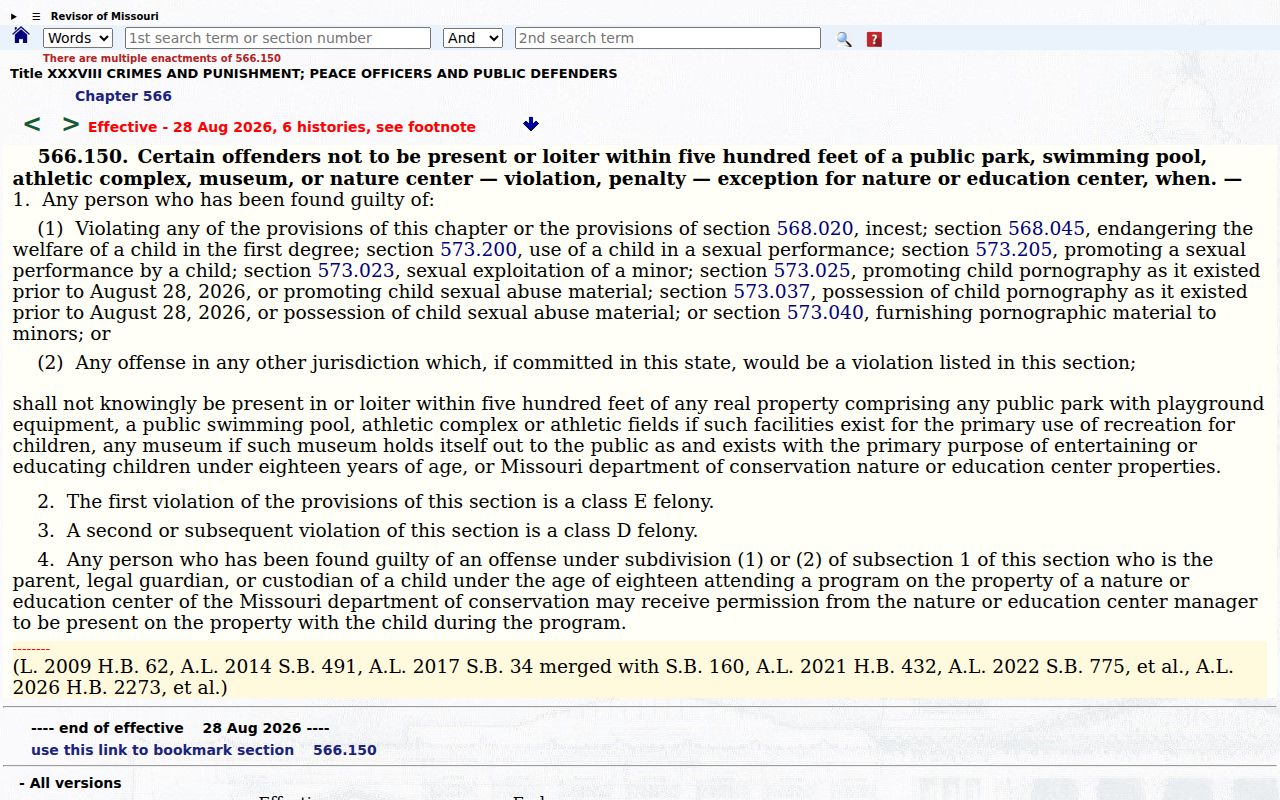
For a real location question, law enforcement or counsel should match the facts to the current statute instead of relying on a broad label.
Using Registry Information Lawfully
Registry information serves personal, family, and community safety. It can help a household learn about registered addresses, review a move alert, or understand the public status attached to a profile. It cannot establish a complete criminal history, predict future conduct, or authorize private enforcement. Inclusion rests on statutory registration and conviction criteria, not on an individualized MSHP finding that a person is dangerous.
When information seems stale, incomplete, or inconsistent, preserve the public profile link and follow the correction chain. Contact the Sullivan County Sheriff for the local registration facts, then MSHP for the statewide display. Report suspected noncompliance instead of investigating it personally. If a search crosses Missouri’s boundary, use NSOPW and then confirm the result with the registering jurisdiction.
Registry misuse is unlawful: Missouri’s official registry warning states that using its information to facilitate a crime is illegal. The public site is authorized by RSMo §43.650. Do not threaten, harass, intimidate, or confront a registrant or anyone in the household.
The most reliable Sullivan County sex offender lookup ends with verification. Match several identifiers, read the complete profile, check the status and address type, and let the sheriff or MSHP resolve any gap. That approach protects public safety without turning uncertain data into an unsupported claim.